
Medal
King's Police Medal (KPM)
Awarded for distinguished service or gallantry in policing.
KPM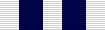
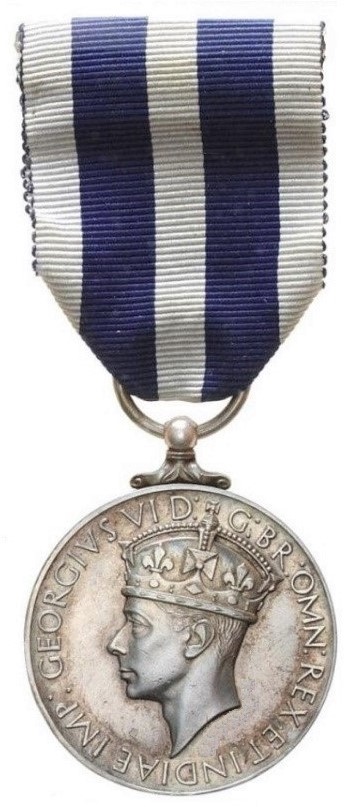
The King's Police Medal (KPM) is awarded to police in the United Kingdom for gallantry or distinguished service. It was also formerly awarded within the wider British Empire, including Commonwealth countries, most of which now have their own honours systems. The medal was established on 7 July 1909, initially inspired by the need to recognise the gallantry of the police officers involved in the Tottenham Outrage. Renamed the King's Police and Fire Services Medal (KPFSM) in 1940, it was replaced on 19 May 1954 by the Queen's Police Medal (QPM), when a separate Queen's Fire Service Medal was also instituted. The current award was renamed the King's Police Medal following the death of Queen Elizabeth II in 2022 and the accession of King Charles III to the throne of the United Kingdom.
Background from Wikipedia (CC BY-SA 4.0).
At a glance
- Established
- 1909 by King Edward VII
- Awarding body
- The British Crown
- Rank
- King's Police Medal
- Formal title
- None
Overview
Recognises bravery or long distinguished service in police forces.
Eligibility
Police officers and staff
- Bravery
- Long service
- Exceptional policing
National or local
Rank & Precedence
King's Police Medal — Decoration for policing
- Above: None
- Below: Higher state honours
Entitlements
- Post-nominal letters
- KPM
- Formal title
- None
- Insignia
- Medal and ribbon
Award Process
- Police service nomination
- Police honours committee
- Approved by the Sovereign
Announced: New Year Honours and King's Birthday Honours
Royal ceremony
Significance
Distinguished police service or bravery
- Courage
- Duty
- Service
Sources & further reading
- Honours: overview — GOV.UK
- Awards and accreditation — The Gazette
- King's Police Medal — Wikipedia
Honoria is an independent reference. Awards are described from public sources; it is not an official or royal body.